Tuesday, July 21, 2015

Ricardo Seco Spring/Summer 2016 New York

 
“It isn’t summer without color,” said Ricardo Seco, a New York City-based designer who’s determined to bring the vibrancy of his home country, Mexico, to urban life. His spring collection titled “Luck,” did just that.
 
Seco used the Mexican card game “La Loteria” as the starting point for the offering, which was created around four cards from the game: the heart, the mermaid, the Scorpio and the palm leaf. These symbols showed up on matching bomber jackets and board shorts, blazers and graphic T-shirts. The hard edge of a leather moto vest was softened with a palm print embroidered on the back.
 
Seco, who has shown eight collections in New York City, said he wanted to create a collection that appealed to musical festivalgoers attempting to stand out in the crowd — and he achieved exactly that.

Friday, July 10, 2015

Menswear Aims for Attention at First NY Men's Fashion Week

In the world of U.S. fashion, women's clothes tend to get most of the glory. But the industry is aiming to change that, one chic skinny suit at a time. Next week, New York welcomes its first ever stand-alone Fashion Week for men.
This isn't new outside the U.S. — Europe's fashion capitals have been holding men's fashion weeks for years. But in New York, menswear has been tacked onto the much higher-profile women's collections shown in September and February, making it seem like a much less glamorous, er, little brother, as well as putting it out of sync with the market schedule for men's clothes.
But the menswear market is growing faster than womenswear, and has been for several years. That means it's the right time for the new venture, says its chief organizer, Steven Kolb, CEO of the Council of Fashion Designers of America.
"It was the perfect time to push the envelope and show what talent and innovation there is in menswear," Kolb says. "We'll have a clean slate. When you start from scratch, you can build it into what you want it to be."
The week is shorter than the women's weeks — four days, not eight — and the roster of designers a mere fraction, too. But some big names are showing, along with a number of up-and-comers. Among the most prominent labels: Michael Kors, Polo Ralph Lauren, Calvin Klein, Thom Browne, Tommy Hilfiger, and Rag & Bone. And there's a big name coming back: American designer John Varvatos, who's been showing in Milan for years.
For Kors, one of the world's most successful designers who mounts high-profile women's shows twice a year in New York, the new men's week is a "huge plus," not only for his own men's collection — which he says will have an "island life feel" this time — but for U.S. fashion.
"Anything that puts the focus on American designers and fashion in general is a good thing," Kors said in an email message. "This is a big step for the men's industry because it provides a larger platform for conversation around menswear, and that's always important. "
Kors sees a clear uptick in consumer enthusiasm for men's fashion in recent years. .
"If you look at the men's fashions weeks in Europe and you look at how men are dressing today," he says, "there is more of a focus on looking, and dressing, stylishly. I think it started because, to be honest, most men aren't wearing a suit every day anymore. They're looking for clothes that are a bit more laid-back but still have that polish and that power. It's almost forcing them to pay more attention to detail and fit, which I think everyone can appreciate."
Another factor in rising interest is what Kolb, of CFDA, calls "the democratization of fashion" — for example, capsule collections from top designers at retailers like Target — and of course the ability to shop online. (Indeed, Amazon is the marquee sponsor of the inaugural Fashion Week: Men's, to be held in a downtown Manhattan venue.)
And there's also, he notes, the growing celebrity influence — for example, high-profile athletes showing a love for fashion. "These guys have shown a less traditional sense of style that has trickled down," says Kolb.
The event comes at a busy time for the buyers, editors and celebrities who attend fashion shows: on the heels of Fashion Weeks in London, Milan and Paris. "We're very aware of the fatigue that may exist," says Kolb. "But we've created an exciting roster of designers. It does require a couple more days and a bit more of a budget, but there are some American editors who maybe can't afford to travel to Europe, but they can come to New York." (For those who do come, Kolb says organizers have been offering incentives to ease travel costs.)
The week will surely have a more relaxed feel than the frenetic women's weeks; many of the designers are showing presentations rather than runway productions.
"Different designers are engaging in different ways," Kolb says. "It all adds up to real support for the business."

The Life of Donna Karan

American fashion designer Donna Karan is one of the most influential designers in the world today.

Born Donna Ivy Faske on October 2, 1948, in Forest Hills, New York. One of the most influential fashion designers in the world, Donna Karan has left a lasting impact on the world of clothing, bringing uptown New York chic into the mainstream. In 2004 she was the recipient of the Lifetime Achievement Award from the Council of Fashion Designers of America.

Early Years

Fashion designer. Born Donna Ivy Faske on October 2, 1948, in Forest Hills, New York. From an early age Donna, who grew up in Hewlett, Long Island, was immersed in the world of fashion. Her mother worked as a model while her stepfather made a living as a suit designer.
Karan's family's influence was apparent in her early life. By the age of 14 she had dropped out of school and begun selling clothing at a local boutique. In 1968 Karan was accepted into the highly respected Parsons School of Design in New York City.
While in school, Karan landed an prestigious summer job working for designer Anne Klein. Her work there proved so impressive that within two years she was named associate designer. By the age of 26, Karan, who was by then married to her first husband, Mark Karan, was named head designer.

Creating Her Own Brand

Karan's ascendency to the top of Anne Klein happened not long after the founding designer's death. Under Karan's direction, and with the help of fellow designer and Parsons friend Louis Dell'Olio, the Ann Klein brand blossomed.
In 1984, Karan, who by then divorced her first husband, Mark, decided to strike out on her own. At her side was Stephen Weiss, her second husband, a painter and sculptor whose calm demeanor helped offset his wife's sometimes intense personality. With Weiss at her side, Karan left Anne Klein and debuted her first women's collection in 1985.
From the start Karan made it her mission to "design modern clothes for modern people." With an increase of women entering the professional workforce, Karan's timing proved to be impeccable.
Her partnership with Weiss was also valuable. Weiss, who passed away from lung cancer in 2001, was said to be the influence for many of her men's wear collections. In 1992, when Karan launched her first perfume, she directed its creators to come up with something that smelled "like Casablanca lilies, red suede and the back of Stephan's neck."
In 1988, Karan, recognizing the need for a more affordable fashion line, launched Donna Karan New York (DKNY), a women's line that was influenced by her original Signature collection. In 1990 she developed DKNY Jeans and then, two years later, debuted DKNY for men.
Since then a whole host of ancillary products have been created under the DKNY name, from children's clothes to furniture.

Later Years

In 2001, Karan sold her publicly traded company to LVMH, Moet Hennessy Louis Vuitton, a French luxury conglomerate. Reports of the sale were said to be nearly $650 million. As part of the sale, Karan agreed to stay on as the designer of the brand.
Over the years Karan has been the recipient of numerous awards and honors. In 2003 she became the first American to ever receive Fashion Group International's "Superstar Award."
The following year, she received the prestigious Lifetime Achievement Award from the Council of Fashion Designers of America.
Donna Karan, who published her autobiography The Journey of a Woman in 2004, lives in New York City.

Donna Karan is Stepping Down & Suspending Collections: Won't Name Successor

           
WWD By Lisa Lockwood
One of the most important designers in the history of American fashion, Donna Karan is stepping down as chief designer of Donna Karan International.
Karan, 66, plans to devote greater time to her Urban Zen Company and Foundation, but will remain a close adviser to DKI under a long-term agreement, according to the company.
The designer created a modern system of dressing for legions of successful women, while establishing a tremendous rapport with her customers which continues to this day.
Karan co-founded DKI with her late husband Stephan Weiss and Takiyho Inc. in 1984. In 1996, DKI went public on the New York Stock Exchange, and in 2001, LVMH Moet Hennessey Louis Vuitton paid $243 million for all outstanding shares in DKI, plus $400 million for Gabrielle Studio Inc., the licensor of the Donna Karan trademarks.
“LVMH and I have made this decision after much soul-searching,” said Karan on Tuesday. “I have arrived at a point in my life where I need to spend more time to pursue my Urban Zen commitment to its fullest potential and follow my vision of philanthropy and commerce with a focus on health care, education and preservation of cultures. After considering the right time to take this step for several years, I feel confident that DKI has a bright future and a strong team in place.”

Pierre-Yves Roussel, chairman and chief executive officer of LVMH Fashion Group, said, “Since 2001, LVMH and Donna Karan have partnered to develop Donna Karan International into a global business. It has been a privilege for all involved to collaborate with Donna and we are very pleased she has agreed to remain an adviser. We are committed to fully realizing the potential of the company while staying true to the spirit and value Donna has championed for more than 30 years.”
Caroline Brown, ceo of DKI, added, “Donna Karan is a visionary designer, who changed the way women dress by redefining power and sensuality. Her influence has been extraordinary and will continue to inspire for years to come. As she steps into this new role, I speak for the many teams at DKI, in supporting her great legacy and reinforcing our commitment to it for our next chapter.”
At the present time, DKI won’t seek a successor for Karan as chief designer of Donna Karan Collection and will suspend that brand’s runway shows and collections for now. The company plans to continue to support the Karan brand through its strong license business. DKI will also reorganize its teams and structure in order to substantially increase its focus on the DKNY brand.
Ironically, Karan’s fall 2015 designer collection was deemed to be one of her best. “The opening look might as well have been a chic sandwich board heralding, ‘I’m back!’” wrote WWD in its review, which praised her tailoring, “spectacular outerwear,” dresses and blouses with volume, untricky layers, and “two black strapless evening gowns that were better than beautiful.”
In April, DKI made a design switch at DKNY, replacing Jane Chung, executive vice president of design at DKNY, with Dao-Yi Chow and Maxwell Osborne, founders and creative directors of Public School, the buzzy men’s wear brand. When they were hired, it was reported that they would report directly to Brown. September will mark their first DKNY collection.
According to sources, DKI may be considering merging the Donna Karan Collection into DKNY and offering a broader range of price points – a similar, but opposite tack taken by sister brand Marc Jacobs, which is incorporating Marc by Marc Jacobs into the Marc Jacobs collection.
It’s been a 31-year labor of love for Karan, a whirlwind of creative energy, who transformed the way women dress, while riding the ups and downs of her fashion company.
She launched her signature collection in May 1985 after a run as co-designer with Louis Dell’Olio at Anne Klein. Her concept revolved around a jersey bodysuit and several interchangeable items that she called her “seven easy pieces.” Designing lifestyle pieces, rather than simply clothes, Karan set out to dress the woman from head to toe, and developed personal relationships with her customers. In the early days, it was not unusual for Karan to be in a retail store, with pins in her mouth and down on her knees, personally fitting a customer in the dressing room.
Her signature pieces have always been black cashmere, leather, stretch and molded fabrics, as well as silhouettes that wrap and sculpt the body.
“For me, the body was very important – and clothing with comfort and the fit. So thank God for stretch. I was the first person to put stretch into fabric,” she said during a discussion at Parsons The New School for Design last year.
“The great thing about being a woman designer is you can be selfish and design for yourself,” she said. For example, questions such as “How do I dress the leg?” inspired Donna Karan Hosiery, and “the right bra?” inspired Donna Karan Intimates. “The perfect glasses” did the same for Donna Karan Eyewear. The launch of DKNY was also a personal thing for Karan. “When I did Donna Karan, my daughter was stealing all my clothes and she needed clothes and I needed jeans that I couldn’t find in the market. I put a blazer with a pair of jeans because I wanted to see what else there was to wear with jeans,” said Karan at Parsons.
That was the beginning of DKNY, which was founded in 1989 to appeal to the contemporary market and her daughter, Gabby. Designed to be fast fashion with an urban mindset, DKNY went on to launch a plethora of labels, such as DKNY Jeans, DKNY Active, DKNY Underwear and DKNY Kids. Both DKNY and Donna Karan Collection became well known for their ground-breaking ad campaigns.


Karan, who received an honorary doctorate from her alma mater, Parsons, has frequently been a proponent of shifting fashion’s delivery cycle to bring clothes into stores in-season. She has been a relentless advocate of the move for years, which at times earned her the nickname “fashion radical.” The onslaught of early markdowns and the reluctance of shoppers to spend, especially on clothes that may be discounted by as much as 70 percent by the time they should actually be worn, has always been one of her pet peeves.

Over the years, DKI became known for its atmosphere of creative chaos. When Stephan Weiss was alive, he provided a sense of calm to Karan’s frenetic energy. When he and Karan took the company public, they continued to privately control Gabrielle Studio, a separate company they formed which owned the Donna Karan trademarks. Once LVMH took over DKI and Gabrielle Studio, there were always rumblings that LVMH might one day replace Karan in her design role and make her an ambassador for the brand. But, to put it simply, Karan has never wanted to be pushed to the sidelines.
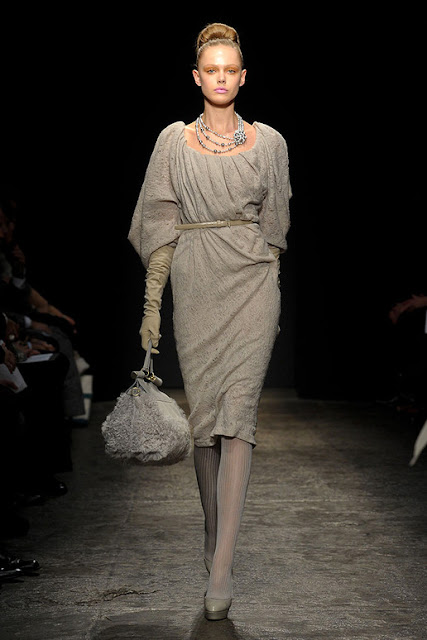
Donna Karan is Stepping Down & Suspending Collections—Won't Name Successor
(1979)
Even as those rumors escalated in recent months, the designer told WWD in an interview in March: “I’m married to my company; I’ll be married to my company whether I’m there or not there. I love the company, it’s my baby. Am I still going to design there? I assume so. I’m working on resort right now; I’m working on next spring.”
During that interview, Karan told WWD that she believed that she could continue to work at the company, even though she had no plans to devote all her time to it. “I think the beauty of what I’m able to do, and similar to that of Karl [Lagerfeld], I can multitask,” said Karan. “Do I have to be there 24/7? I don’t think so. Because of the way the schedule works, I’m able to do my work and able to live. If it was at the point where I had to be at that office 24/7, no I couldn’t do it.”
When she’s not in New York, Karan spends much of her time in Parrot Cay in Turks & Caicos, East Hampton and Haiti.
Throughout her career, Karan has cultivated many social and philanthropic causes that have pulled her away from the day-to-day role of designing. She founded the Urban Zen Initiative, which advances wellness and culture and empowers children. She’s also an honorary ambassador to Haiti and works closely with the Clinton Global Initiative to support and develop Haitian artisan commerce. She was instrumental in getting the ball rolling for several major projects, among them the first Seventh on Sale benefit to raise funds for AIDS awareness and education, and Kids for Kids, the carnival-type event that helps the Elizabeth Glaser Pediatric AIDS Foundation.
She also underwrites Super Saturday, the annual designer sale in the Hamptons that she started with the late Liz Tilberis to benefit the Ovarian Cancer Research Fund. President Clinton presented her the Clinton Global Citizen Award, and she also received the Gordon Parks Foundation Award for using creative means to change the world.
Urban Zen is a stand-alone company owned by Karan herself. The collection features seasonless basics in a neutral color palette and corresponding jewelry, accessories and home decor handmade by artisans employed by Urban Zen. A yoga line will be launched in the fall. Many of the goods are produced in Haiti, Thailand and Bali.
“As I have become more involved with my Urban Zen Foundation and company, it has been a challenge to balance it all. The clock is ticking. I have so many commitments and projects that require my full attention at Urban Zen, as well as my time-consuming philanthropic pursuits in healthcare, education and preservation of culture. There are only so many hours in the day,” added Karan.
A major indicator of the changes taking place at DKI occurred in May when Karan’s executive vice president of global public relations and communications, Patti Cohen, resigned from the company. Her alter-ego as well as best friend, Cohen had been by Karan’s side for 30 years and a guiding force in her life, personally and professionally.

From the start, DKI has seen its share of senior management come and go, after varying degrees of success. Among them were Julie Stern, Stephen Ruzow, John Idol, Pino Brusone, Mark Weber, and now Brown. In the March interview, Karan said, “It’s frustrating to see the potential of a company [and to] not reach its potential.”
DKI struggled for several years after it went public, resulting in a change in strategy toward licensed divisions and broader product distribution to help offset royalty payments made to the designer. Well after the deal was stuck with LVMH to acquire Karan, executives at the French luxury goods group were said to be surprised to learn the amount of off-price distribution of the brands, as well as the high expenses related to the management of the company.
 
 Last September, Roussel acknowledged that LVMH had not maximized the expansion potential of DKI over the last 14 years. “We’ve grown the brand nicely, we’ve invested, but we’ve not made a step change,” he said. “We make a step change when we feel we have the equation right, like we did with Céline or with others.”
At the time of Brown’s appointment, Roussel said he intended to partner with her and Karan to find the right path to catapult DKI, including deciding “what we want to keep, and what we want to discontinue.”
“We’re probably doing too many things in too many directions, and in my experience, it’s much better to do fewer things, but to do them really well….The brand architecture has to be looked at. I think it has to be clarified,” said Roussel, referring to the various subbrands and capsules that have sprouted over the years. At the time, Roussel said he intends to reinforce the “strong” and distinct identities of the Donna Karan and DKNY brands, and said it was too early to talk about any changes in creative leadership. “We’ll be looking at everything,” he said.
“We are challenging ourselves; there is nothing taboo, and each time we do projects, we are willing to change what needs to be changed. And we’re doing it openly with Donna, who has built an incredible brand. The brand carries her name, so she’s part of it, whatever shape and form it will take, there’s no question,” he continued. “Then in what creative configuration, we’ll see, but I think she can still bring a lot.”
On Tuesday, Karan said, “Donna Karan is a part of me, past, present and future. It has been an honor to speak woman to woman about ‘Seven Easy Pieces’ that forever changed the way women dress. I want to express my gratitude and my deepest feelings to the dozens and dozens of colleagues over the years who have helped take Donna Karan New York far beyond my wildest dreams.”

Donna Karan Steps Down, in Major Shift for Fashion

In a major shift for American fashion, Donna Karan, the 66-year-old founder and chief designer of Donna Karan International, a brand that defined the way American working women dressed for decades, announced on Tuesday that she was leaving the helm of the house that bears her name.
Ms. Karan will remain as an adviser to Donna Karan International, but devote more time to her Urban Zen line, which centers on wellness and artisanal goods, and its foundation.
LVMH Moët Hennessy Louis Vuitton, the French conglomerate that bought the house in 2001, said there were no immediate plans to replace her as a designer, and the main Donna Karan collection would be suspended. It will not hold a show at New York Fashion Week in September.          
Instead, according to an announcement, the company will reorganize its teams and structure to “substantially increase its focus on the DKNY brand,” the company’s more accessible line, which is currently responsible for 80 percent of Donna Karan International revenue. It will also maintain its license business.
“It’s a big corporate move and strategy statement,” said Robert Burke, founder of a namesake luxury consultancy and former fashion director of Bergdorf Goodman.
Ms. Karan said in a statement, “LVMH and I have made this decision after much soul-searching. I have arrived at a point in my life where I need to spend more time to pursue my Urban Zen commitment to its fullest potential and follow my vision of philanthropy and commerce.”
Interestingly, Ken Sunshine and the communications firm Sunshine Sachs were handling press requests for Ms. Karan on Tuesday.
Although Mr. Sunshine represents a number of top-drawer entertainment clients, including Ms. Karan’s close friend Barbra Streisand, he is largely known for his work in crisis management and his aggressive representation of people in acrimonious situations.
Over the past year, there have been signs that the relationship between Ms. Karan and LVMH had deteriorated.
Last summer, Ms. Karan shuttered the three-story, 11,000-square-foot space on Madison Avenue that for more than a decade had operated as her signature line’s flagship store. This winter, the Neapolitan men’s wear brand Isaia took over the lease.
In March, Ms. Karan gave an interview to WWD in which she seemed to acknowledge that all was not well with LVMH.
“I’m married to my company,” Ms. Karan said. “I’ll be married to my company whether I’m there or not there. I love the company, it’s my baby. Am I still going to design there? I assume so.”
The decision also reflects a reality of the New York fashion world, which has seen an explosion in the contemporary market in recent years thanks to brands such as Tory Burch, Alexander Wang and Rag & Bone.
In April, LVMH acknowledged the importance of the sector by naming the hot young designers Maxwell Osborne and Dao-Yi Chow of the haute streetwear brand Public School the creative directors of DKNY, to much fanfare.
At the time, Pierre-Yves Roussel, chairman of the LVMH Fashion Group, said that LVMH “knows for a fact that most people who buy DKNY did not even know it was by Donna Karan.”
The retirement of Ms. Karan’s long-term right hand, Patti Cohen, in May led to speculation that Ms. Karan might also soon step down. At a presentation later that month, Ms. Karan told a reporter, “Never say never.”
In an email, Ms. Streisand said that she was not worried about her friend.
“Donna is so great at everything she does... designs, friendships, compassionate causes... I’m sure her next steps will amaze us,” she said.
Still, Ms. Streisand added, “I surely will miss her clothes.”
To a generation of women, Ms. Karan, who started her company in 1984 with “seven easy pieces,” a mix-and-match wardrobe, was a personal heroine: a role model who understood their needs and solved their problems.
“Donna created a way of dressing that was womanly, practical and empowering, and came from a deeply personal, instinctual place; she has always let her empathetic heart rule her design head,” said Anna Wintour, the artistic director of Condé Nast and editor of Vogue magazine.
Along with Calvin Klein and Ralph Lauren, Ms. Karan created one of the first truly global brands at New York Fashion Week, an achievement that brought her to the attention of LVMH, which paid $243 million to acquire the brand.
It also earned her a Lifetime Achievement Award from the Council of Fashion Designers of America in 2004. She has also received the women’s wear designer of the year award and the men’s wear designer of the year award.
“She came to the fore at a time when it was mainly men designing for women, and she knew and understood her customers like no one else,” Mr. Burke said.
In the company’s statement, Caroline Brown, chief executive of Donna Karan International, said of Ms. Karan, “I speak for the many teams at DKI in supporting her great legacy and reinforcing our commitment to it for our next chapter.”